

A little preparation can make a big difference once you are on the road. Whether your RV has been stored for a season or you traveled recently, take time to inspect the systems that affect safety, reliability, and comfort. Always follow the maintenance procedures and specifications in your owner's manuals.
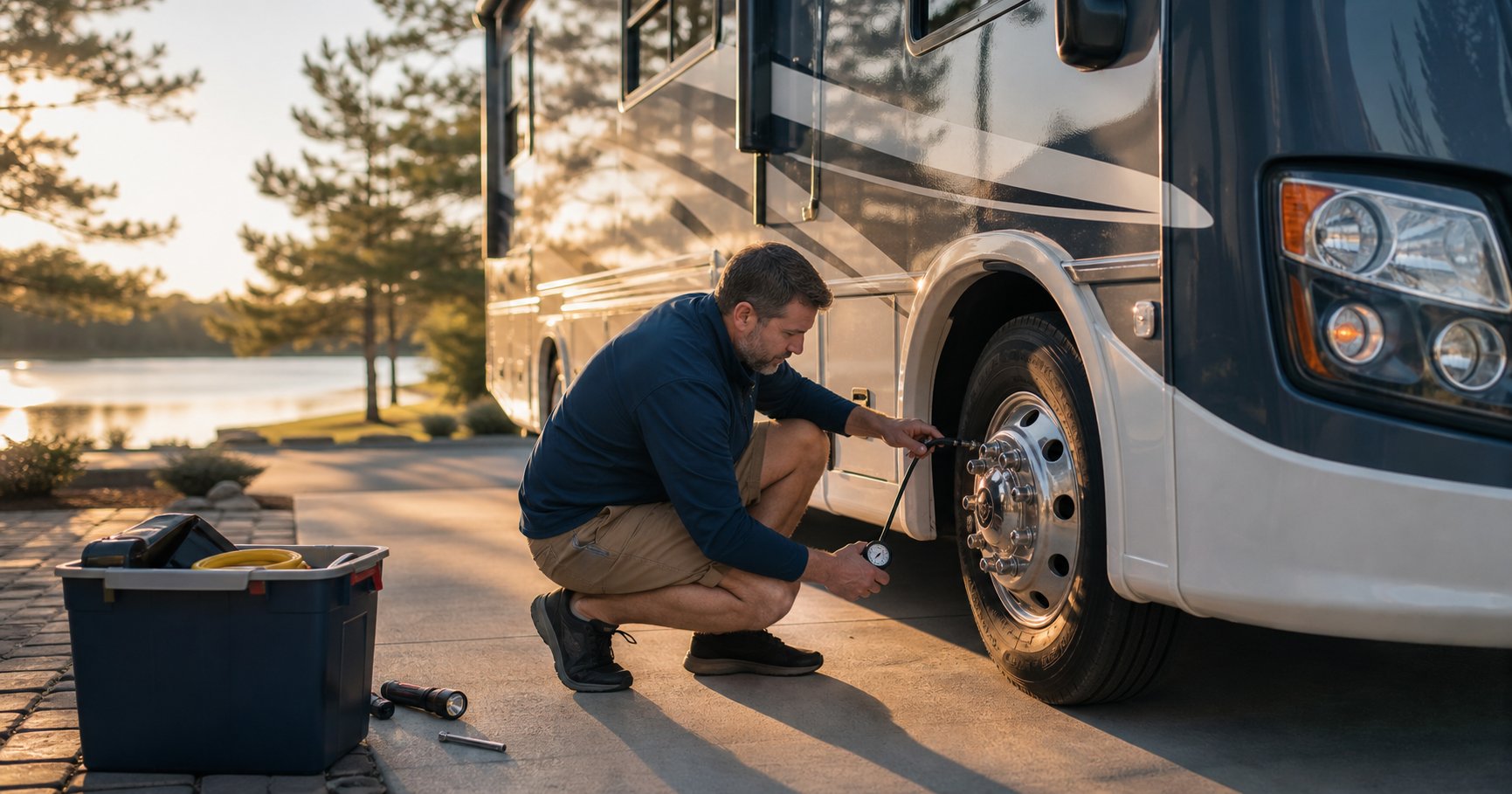
1. Tire pressure and tread condition
Check tire pressure when the tires are cold and inflate them to the specification provided by the RV or tire manufacturer for your setup. Look closely for uneven wear, low tread, cuts, bulges, cracking, or objects embedded in the tire.
Do not forget the spare. Confirm that it is properly inflated, accessible, and accompanied by the tools you would need to use it. If a tire shows damage, unusual wear, or age-related deterioration, have it evaluated by a qualified tire professional before traveling.
2. Battery charge and connections
Verify that the house and chassis batteries hold an appropriate charge. With the RV safely powered down according to the manufacturer's instructions, visually inspect terminals and cables for loose connections, corrosion, swelling, leaks, or other damage.
Test the systems that depend on battery power, including interior lighting and safety devices. Battery types have different maintenance requirements, so consult the battery and RV manuals before cleaning terminals, adding water, charging, or disconnecting cables.
3. Roof seals and signs of water intrusion
From a safe position, inspect visible sealant around roof vents, skylights, antennas, air-conditioning units, windows, doors, and exterior seams. Cracked, separated, or missing sealant can allow water to enter and cause damage that may remain hidden for some time.
Inside the RV, look for stains, discoloration, soft areas, peeling finishes, or musty odors near ceilings, walls, cabinets, and slide-outs. If roof access is unsafe or the manufacturer does not recommend walking on it, arrange a professional inspection instead.
Thinking about your next RV?
And if your current RV no longer fits the way you travel, Vantage Recreational Finance can help you explore financing options for your next vehicle.
Start your application4. Brakes, lights, and safety equipment
Test headlights, brake lights, turn signals, marker lights, hazard lights, and trailer connections with help from another person. Check that mirrors and cameras are clean and properly positioned. Towable RV owners should also inspect the hitch, safety chains, breakaway system, and electrical connector.
Confirm that smoke, carbon monoxide, and propane detectors operate correctly and are within their replacement dates. Check fire extinguishers, emergency exits, first-aid supplies, and roadside equipment. Brakes or hitch components that do not operate normally should be inspected by a qualified technician before departure.
5. Generator and fluid levels
Check engine oil, coolant, transmission fluid, generator oil, and other service points that apply to your RV, using the procedures and fluid specifications in the relevant manuals. Look underneath and around the RV for signs of leaks.
Run the generator only in a properly ventilated outdoor location and test it under load according to the manufacturer's guidance. Confirm that fuel, propane, fresh water, and waste tank levels are appropriate for the trip and that caps, valves, and hoses are secure.
Finish with a complete walkaround
Before pulling away, close and latch windows, doors, vents, awnings, storage compartments, and slide-outs. Disconnect shore power, water, and sewer lines; secure loose items; raise stabilizers and steps; and verify that antennas or accessories are in their travel position.
Ready for a different RV?
If an upgrade or replacement is part of your next adventure, estimate a potential payment with our payment calculator or begin a secure online financing application.
This checklist provides general educational information and is not a substitute for the owner's manuals, manufacturer instructions, professional inspection, maintenance, or repair. RV systems and service requirements vary by model. Do not operate or travel in an RV when a safety-related condition has not been corrected.
← Back to all resources