The first great weekend of the season is not the ideal time to discover a dead battery, expired registration, or missing safety equipment. Start early and follow the procedures for your boat, engine, trailer, and local boating area.
Check the engine and mechanical systems
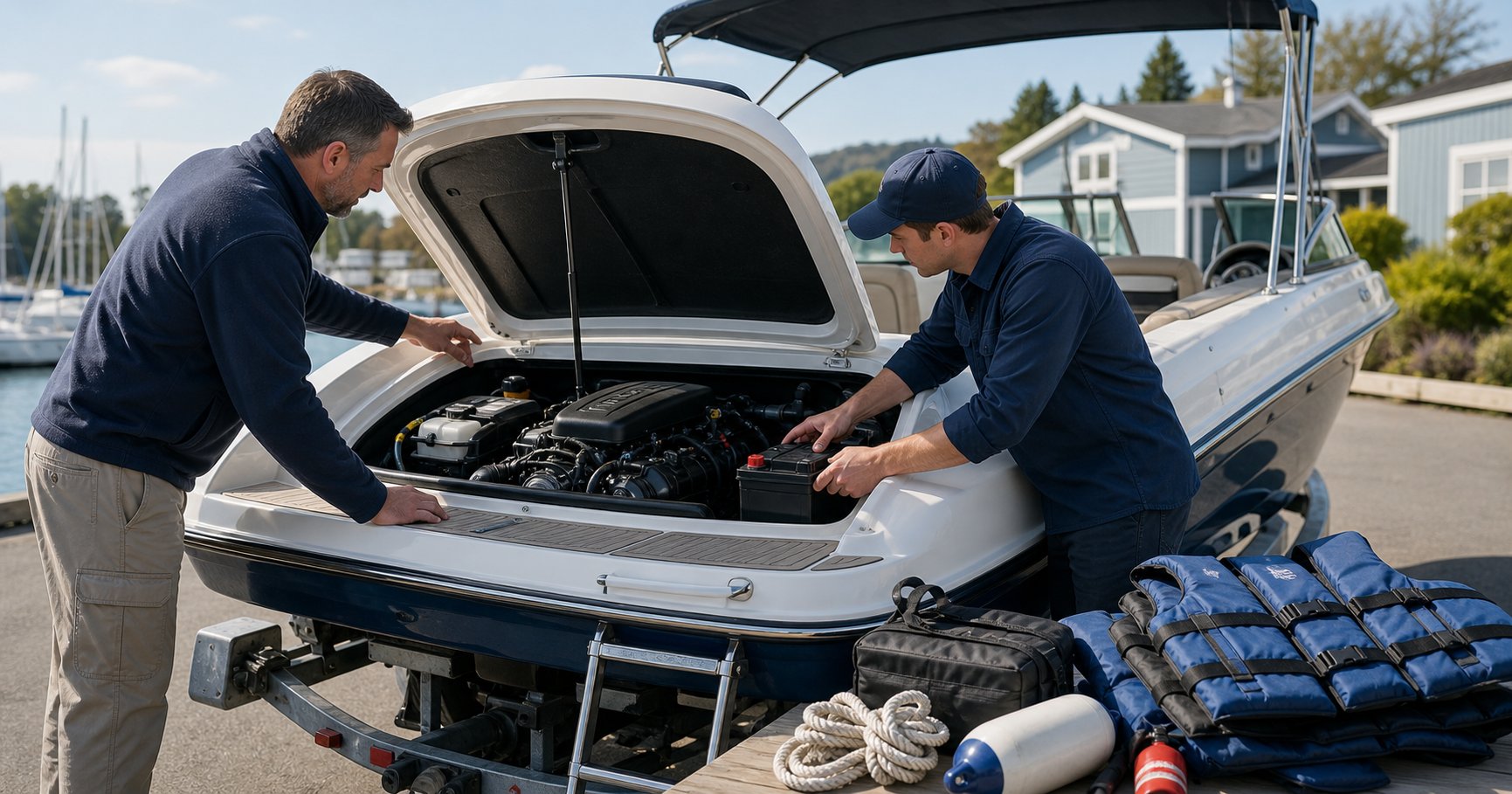
Depending on the boat, review engine oil, fuel and cooling systems, belts, hoses, batteries, steering, propeller, and applicable fluid levels. If the boat was stored for an extended period, consider professional inspection or recommissioning service.
Test electronics
Verify navigation equipment, GPS, depth finder, VHF radio, lights, bilge pump, horn, and other onboard systems. Test them while there is still time to diagnose a problem before launch day.
Review safety equipment
Confirm that required life jackets, fire extinguishers, signaling equipment, first-aid supplies, anchor, lines, and other gear are present, accessible, in good condition, and within applicable service or replacement dates.
Inspect the trailer
If you trailer your boat, inspect tires, wheel bearings, lights, brakes, winch, safety chains, coupler, and tie-downs. Confirm that the tow vehicle and hitch are suitable for the load and setup.
Has the way you boat changed?
Season preparation can reveal that your current boat no longer fits your space, features, or activity needs.
Explore financing optionsReview paperwork
Check that registration, insurance, permits, and required documentation are current. Requirements vary by state, location, vessel, and activity.
Plan upgrades before the season
You may want updated electronics, navigation, audio, seating, safety equipment, or accessories. Or you may realize that a different boat would better fit your needs. Planning early leaves more time to compare options.
Regular seasonal care also helps protect your boat's condition and value.
This checklist is general educational information and does not replace manufacturer instructions, local requirements, professional service, or a qualified safety inspection.
← Back to all resources